
 Free Delivery & Return
 365-Day Returns
 10 Million Happy Customers
 500,000 Products in Stock


Outdoor Kitchens


Outdoor Kitchen
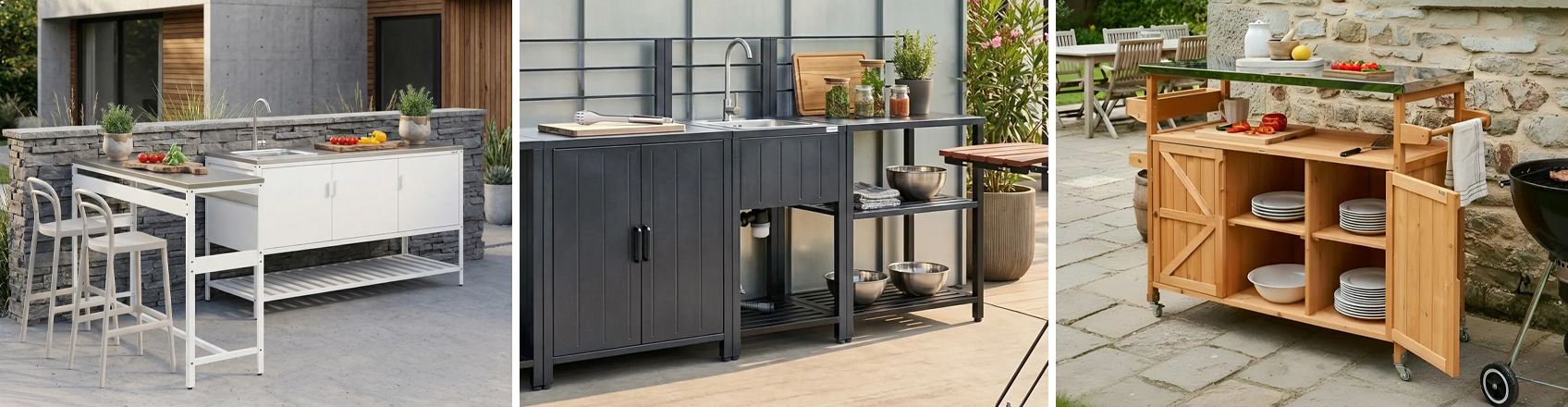
An outdoor kitchen extends cooking from a single portable barbecue into a proper worktop, storage, and often a sink positioned outside, ready to use through the warmer months without carrying everything back indoors. Getting the size and materials right matters: a cramped single unit limits how many dishes you can prepare at once, while the wrong frame or worktop can weather badly within a season or two.
How many pieces do you need for an outdoor kitchen?
A single island or cabinet is enough for a terrace or balcony, giving one worktop and some storage without a large footprint. A two-piece set suits a patio where you still want washing-up facilities next to the cooking space. Three- or four-piece sets work best in a garden with a dedicated dining area, since they add enough worktop and storage to prepare and serve meals outdoors.
- Floor space available for the full footprint
- Whether you want a built-in sink
- How often you cook outdoors
- How many people the kitchen needs to serve at once
Which piece types do what?
Main worktop
Outdoor kitchen islands
The centrepiece of most setups, providing the main worktop surface for food preparation with storage underneath in shelves, drawers or cupboards. Islands with a built-in sink keep washing up and food prep in one area rather than requiring trips back inside. Larger "big island" options suit households that entertain regularly and need space for several people to work around.
Extra worktop
Outdoor kitchen cabinets
Lower-profile than a full island, cabinets work alongside it to extend the worktop and add storage, typically sitting against a wall or fence rather than standing independently. Cabinets with a sink built in suit a multi-piece setup where the island is used mainly for cooking and you want a separate area for cleaning and prep.
Flexible serving
Garden serving trolleys and bar tables
A serving trolley gives you a mobile surface that moves between cooking area and dining table, which is particularly useful when entertaining. Bar tables add a standing-height option for drinks and casual dining alongside the main outdoor kitchen, making the space work harder without a full extra seating arrangement.
Shop now: outdoor kitchen sets and outdoor kitchen islands and racks
What materials are used, and how do they hold up outdoors?
Frames and worktops each come in different materials, and the combination you choose affects both how the kitchen looks and how much upkeep it needs over time. The main options are metal, wood and synthetic worktops, each with different maintenance requirements and practical advantages.
Metal frames
Metal frames are a practical choice for outdoor kitchens used regularly throughout the year. They are generally easy to maintain and can be wiped clean with a damp cloth. Powder-coated finishes add protection against moisture, corrosion and UV exposure, although scratches and damaged coating should be addressed to prevent rust. Metal frames suit gardens where durability and low maintenance are priorities.
Wooden frames
Wooden frames suit gardens with natural planting, stone surfaces or timber decking. They create a warmer, more traditional appearance than metal. Maintenance depends on the wood species and finish, but many wooden frames benefit from periodic treatment with a suitable wood oil or protective product. Regular care is particularly important when the kitchen is exposed to rain and changing temperatures.
Metal worktops
Metal worktops are well suited to frequent outdoor cooking and food preparation. Their smooth surfaces are easy to wipe down after use, making them practical where hygiene and regular cleaning matter. Stainless steel is particularly useful because it resists corrosion and does not require the same surface treatments as wood. However, a metal worktop can become hot in direct sunlight, and its heat resistance depends on the material and finish.
Wooden worktops
Wooden worktops bring a natural appearance to outdoor kitchens and complement traditional garden furniture. They require more maintenance than metal, especially in wet conditions. Regular cleaning, suitable wood oil and a protective cover when the kitchen is not in use help protect the surface from moisture and weathering. They are a good choice when appearance is a priority and regular upkeep is manageable.
Synthetic worktops
Synthetic worktops are designed to provide a practical alternative to natural materials. Depending on their composition, they can offer good resistance to stains and moisture without requiring regular oiling or sealing. They suit outdoor kitchens where easy cleaning and low maintenance are important. Check the specific material's resistance to heat and UV exposure before choosing one for a fully exposed cooking area.
Read more: how outdoor furniture materials hold up outside
What features should you look for?
Storage configuration is one of the most important practical decisions. Pieces with doors keep contents better protected from rain and dust, which matters for anything you want to store outside for extended periods. Open shelves are more convenient for items you reach for constantly, but they are better suited to covered outdoor areas where rain exposure is limited. Many pieces combine both, with doors on lower sections and open shelves above.
Plan the water connection before you buy
A built-in sink removes the need to go inside to wash produce, fill containers or clean up between courses, which makes outdoor cooking more self-contained. Most sinks in this range need a connection to an outdoor water supply and drainage, so it is worth checking this infrastructure is in place, or planning for it, before choosing a sink unit.
Read more: modular outdoor kitchen ideas for your garden
What to check before buying
Before choosing an outdoor kitchen, check these practical details against your available space and how you intend to use it.
- Measure the full footprint and leave enough room to stand and move comfortably on the cooking side.
- Match the number of pieces to how often you cook outdoors and how many people usually gather around.
- Decide whether you need a built-in sink and check the availability of an outdoor water supply and drainage.
- Choose a frame material suited to local weather conditions and the amount of upkeep you can manage.
- Check that the worktop material is suitable for the food preparation and cooking tasks you plan to carry out.
- Choose closed storage for items that need protection from the weather and use open shelves mainly in covered areas.
Frequently asked questions
Does an outdoor kitchen island come with a built-in grill or hob?
No. Outdoor kitchen islands and cabinets provide worktop space, storage and sometimes a sink, and are designed to be used alongside a separate barbecue, grill or portable hob rather than one built in. This keeps the setup modular, so the cooking appliance can be positioned or replaced on its own.
Can an outdoor kitchen be left outside all winter?
Pieces with a powder-coated metal frame and a metal or synthetic worktop are designed to stay outside through the colder months with little upkeep. Wood worktops cope better with a protective cover or an extra coat of wood oil before winter sets in.
How much space should you leave around an outdoor kitchen island?
Leave enough room on the cooking side for someone to stand, turn and reach the worktop comfortably, and keep a clear path to any separate barbecue or dining table. For a multi-piece set, this usually means allowing more floor space than the footprint of the units themselves.
What base or surface does an outdoor kitchen need to stand on?
A level, stable and paved surface such as a patio or solid decking is needed, since a loaded island with a worktop and storage requires firm support. Soft grass or loose gravel is not a suitable long-term base.
What if your garden does not have a water connection yet for the sink?
Most outdoor kitchen sinks need a connection to an outdoor water supply and drainage to work properly, so it is worth having a tap point and drain installed first. If that is not possible yet, choosing a configuration without a sink is the simpler option until the plumbing is in place.