Free Delivery & Return
 365-Day Returns
 10 Million Happy Customers
 500,000 Products in Stock

How to style pouffes at home
Reviewed by the Beliani Content Team · Updated November 2026
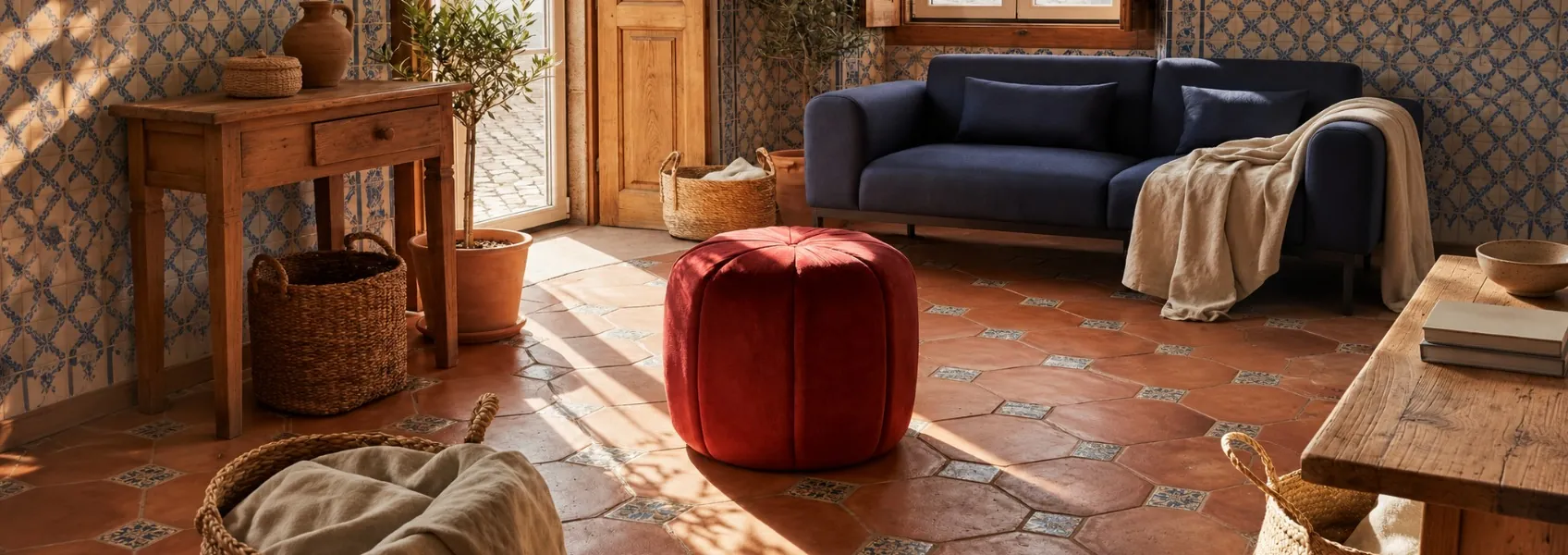
A pouffe is one of the few pieces of furniture that earns its place in almost any room without asking for much space in return. It moves easily from an extra seat to a footrest to a side table, which makes it one of the most flexible ways to add comfort to a living room, bedroom or patio. This guide covers where a pouffe works best, which material suits your household, and how to pick the right size for the furniture it sits beside.
In short
How do you style a pouffe at home?
Use a pouffe as extra seating, a footrest, a tray-topped side table, hidden storage, or a styling accent in a colour or texture that contrasts with the rest of the room. It works equally well in a living room, bedroom or anywhere you want a low, flexible extra surface or seat.
What can you actually use a pouffe for?
A pouffe's value comes from how many jobs one piece can do. Because it is light enough to move with one hand, you can test a few of these uses in the same room before settling on where it works best.
Comfort
Extra seating and a footrest
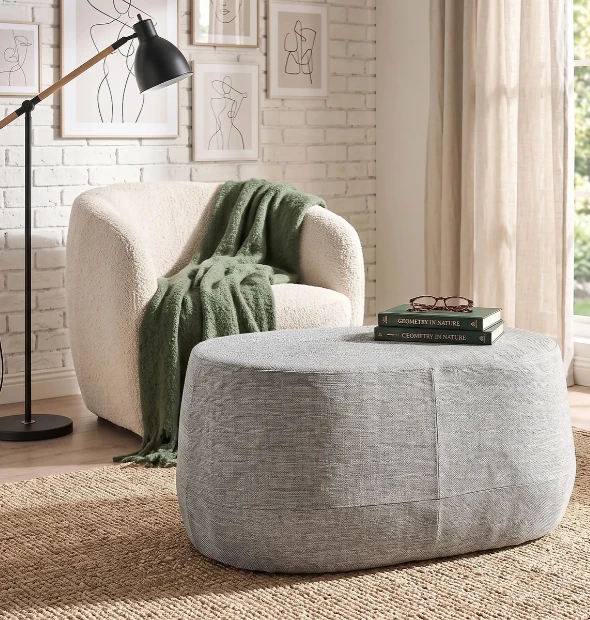
Compact and lightweight, a pouffe works as a quick seating fix for guests, or paired with your favourite armchair or sofa as a place to put your feet up.
Surface
Side or coffee table stand-in
Top it with a sturdy tray and a pouffe becomes a surface for books, magazines or a hot drink, without taking up the space a full table would.
Storage
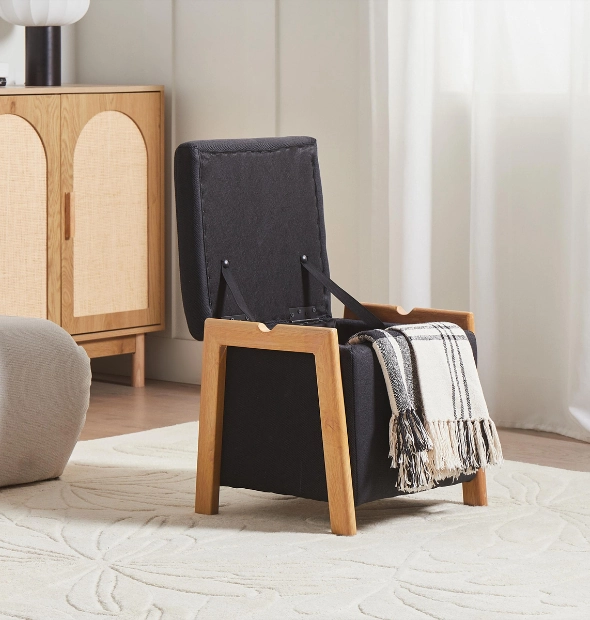
Hidden storage compartment
Certain pouffes lift open to reveal a compartment underneath, useful for stowing blankets, remote controls or other items out of sight.
Styling
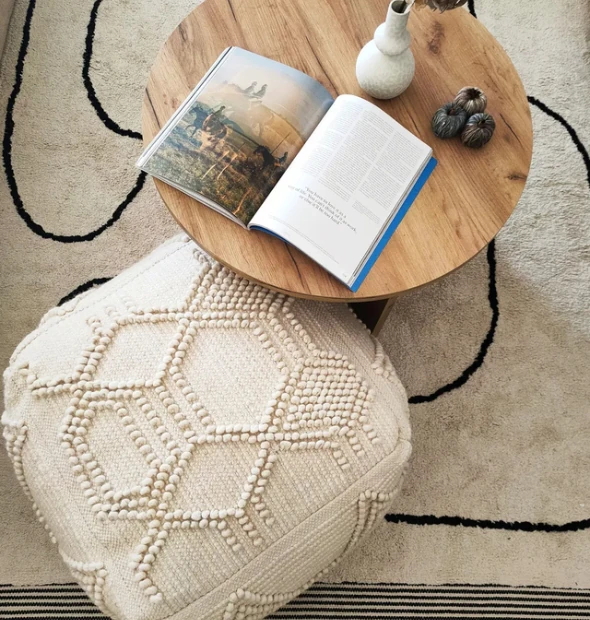
A low-commitment accent piece
Available in velvet, leather and woven fabric, a pouffe is an easy way to bring in a colour or texture without recovering a whole sofa.
Shop now: pouffes and footstools
What's the difference between a pouffe and a floor cushion?
A floor cushion is softer and less structured than a pouffe, with no internal frame to hold its shape, so it moulds to however you sit rather than offering a fixed seat height. This makes floor cushions a better fit for flexible, low-to-the-ground seating: around a low coffee table, grouped on a rug for extra guests, or stacked against a wall for casual lounging. A pouffe is the better choice when you want a stable seat height you can rely on for a footrest or a tray, while floor cushions suit rooms where the seating arrangement changes from one day to the next.
Shop now: floor cushions
What size pouffe should you choose?
Rule of thumb
Aim for a pouffe with a seat height roughly two-thirds that of the sofa or chair it pairs with, so your lower leg rests at a relaxed angle rather than pointing up or down.
Proportion matters more than most people expect when a pouffe is going to sit beside a specific sofa or armchair. For width, leave at least 40–50cm of clear floor space around the pouffe so it does not block walking routes or make the seating area feel cramped.
- A pouffe used purely as a footrest can sit slightly lower than the sofa seat, since your leg is already resting, not bent at 90 degrees
- A pouffe doubling as extra seating should be closer to the height of the sofa itself, so sitting down and standing up feel natural
- A pouffe used as a side table should have a flat, reasonably firm top, since a very soft, rounded top makes a tray unstable
Which material should you choose for a pouffe?
Choosing the right material for a pouffe affects its durability, comfort and day-to-day upkeep. The best material for you depends on how the pouffe will be used and who will be using it.
| Material | Best for, and how to care for it |
|---|---|
| Leather and faux leather | High-traffic rooms and households with children or pets. Wipe clean with a damp cloth; resists daily wear well. |
| Polyester and nylon | Busy households needing an easy-clean, budget-friendly option. Wipe clean; some covers are machine washable, so check the label. |
| Wool, cotton and jute | A relaxed, natural-feeling living room or bedroom. Breathable but less resistant to spills; vacuum or brush regularly. |
| Velvet and chenille | A low-traffic room where you want a softer, more luxurious focal point. Needs gentler care; avoid harsh scrubbing and blot spills quickly. |
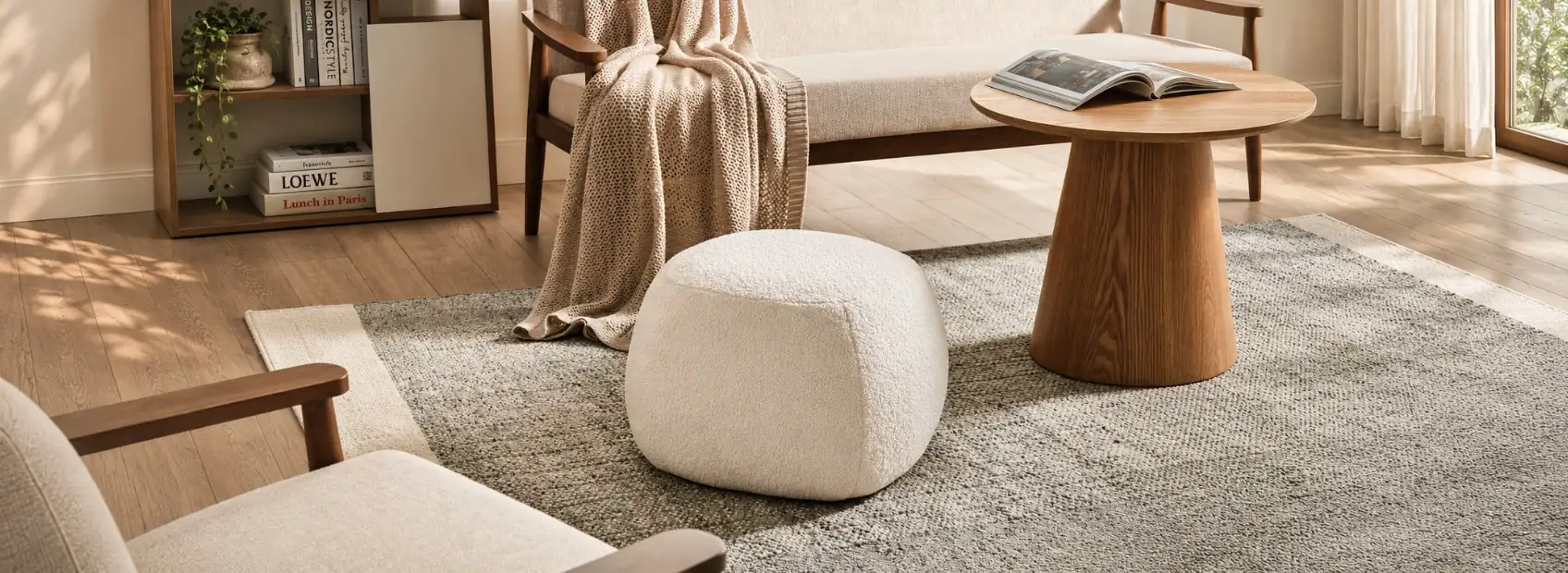
What should you look for in a pouffe for a home with kids or pets?
Look for a low, soft-sided pouffe with a wide, stable base rather than a tall, narrow one, since there is less distance to fall and no sharp corners to catch on. On top of shape, check the upholstery: leather, faux leather and water-repellent or stain-resistant fabric coatings wipe clean quickly after muddy paws or a spilt drink, which matters more day-to-day than the material's look. This combination of a stable base and an easy-clean cover is why pouffes are a common choice for playrooms as well as living rooms, and why many double easily as a pet bed.
Choose a wider base for unsupervised climbing
If a toddler is likely to climb or stand on the pouffe without supervision, choose a wider, more stable base over a tall, narrow one. A pouffe that tips easily is a common cause of minor falls in homes with young children.
Can a pouffe be used outdoors?
Yes, but only an outdoor-specific pouffe should be left outside permanently. Look for weather-resistant fabric, such as olefin or solution-dyed acrylic, and a frame rated for outdoor use. An indoor pouffe can be brought out for a few hours on the patio, but should be stored away afterwards, since rain and direct sun will damage most indoor fabrics and foam fillings over time.
Shop now: outdoor pouffes
What to check before buying a pouffe
Once you know where the pouffe will go and how it will be used, run through this list before adding it to your cart.
- Seat height against the sofa or armchair it will sit beside, aiming for roughly two-thirds that height
- At least 40–50cm of clear floor space around the pouffe so it does not block walking routes
- A flat, firm top if you plan to use it with a tray as a side table
- Material matched to the room's traffic: leather or polyester for busy households, wool or velvet for calmer spaces
- A wider, more stable base if young children will be climbing on it unsupervised
- Weather-resistant fabric and frame if it will live outdoors permanently
Frequently asked questions
Can a pouffe replace a coffee table?
Yes, provided you add a tray on top to create a flat, stable surface. Without a tray, a soft pouffe top is fine for a cup set down briefly, but it is not stable enough for a laptop or anything that could tip.
How many pouffes does a living room need?
One is enough for most living rooms, placed beside a sofa or armchair. Two smaller pouffes work well in larger rooms or where more flexible seating is useful, such as pulling one in for a guest.
Are pouffes safe for toddlers to use?
A low, soft-sided pouffe is generally safer around toddlers than furniture with hard edges or a high seat, since there is less distance to fall and no sharp corners. Choose a wider, more stable base over a tall, narrow one if a toddler will be climbing on it unsupervised.
Can pouffes be used outdoors permanently?
Only a pouffe made for outdoor use, with weather-resistant fabric and a frame rated for exposure, should be left outside permanently. An indoor pouffe brought outside should be stored away when not in use, since rain and direct sun will damage most indoor fabrics and foam fillings.
Do storage pouffes lose comfort compared to solid ones?
Slightly. A storage pouffe's lid needs to stay rigid enough to open and close, so it is usually firmer underfoot than a fully upholstered, foam-filled pouffe. The trade-off is worth it in smaller homes where the hidden storage space matters more than extra softness.