
 Free Delivery & Return
 365-Day Returns
 10 Million Happy Customers
 500,000 Products in Stock


Accessories (330)


Accessories
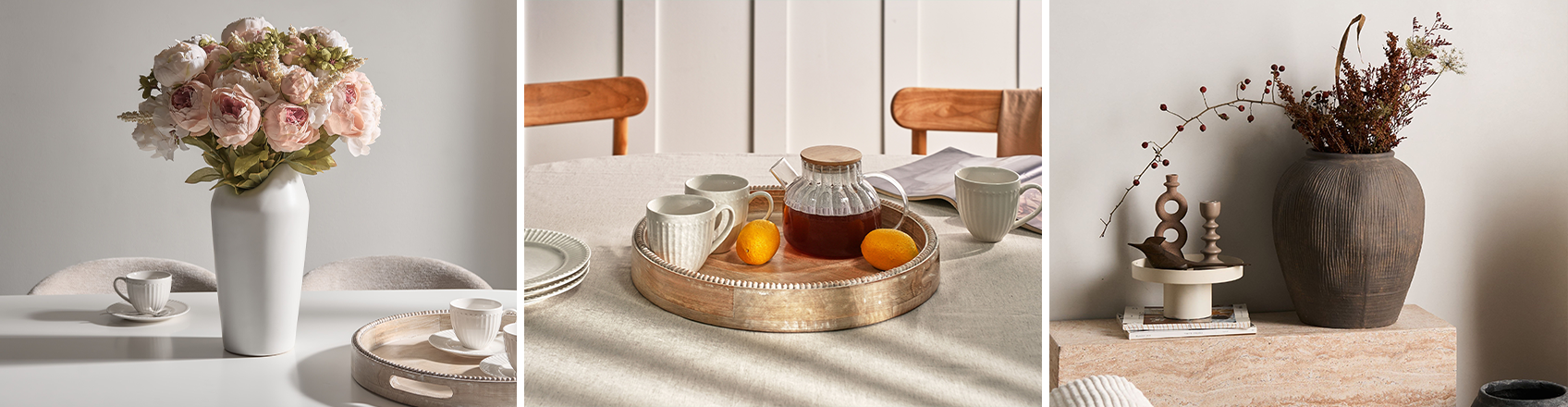
Home accessories are the layer that gets added last: vases, framed prints, cushions, storage boxes, mirrors and the smaller finishing pieces that turn a furnished room into a lived-in one. Unlike a sofa or a dining table, most of them are quick and low-risk to swap, which makes them the easiest way to update a space without a full renovation. This guide covers which accessories do the most for each room, and how to make a mixed collection of pieces look chosen rather than scattered.
Which accessories work best in a living room?
A living room accumulates accessories faster than any other room, from a vase on the coffee table to a piece of art above the sofa.
Beyond that starting point, these pieces do the most for how the room looks and feels day to day:
- Vases: filled with dried stems or left empty as a sculptural object, a vase adds interest to a coffee table, shelf or mantelpiece without needing any upkeep.
- Decorative lighting: table lamps, floor lamps and accent lighting create pools of light that a single ceiling fitting cannot, and let you change the mood without rewiring anything.
- Ornaments and figurines: small sculptural pieces give open shelving a focal point instead of leaving it bare.
- Artificial plants and flowers: a practical option if real plants don't survive in your home, since well-made faux versions need no light or watering.
- Plant pots: for real plants, a pot in a material suited to your light levels protects the plant as much as it decorates the room.
- Electric fireplace or mantel: adds a focal point and gentle heat in a room with no chimney, without the upkeep a real fire needs.
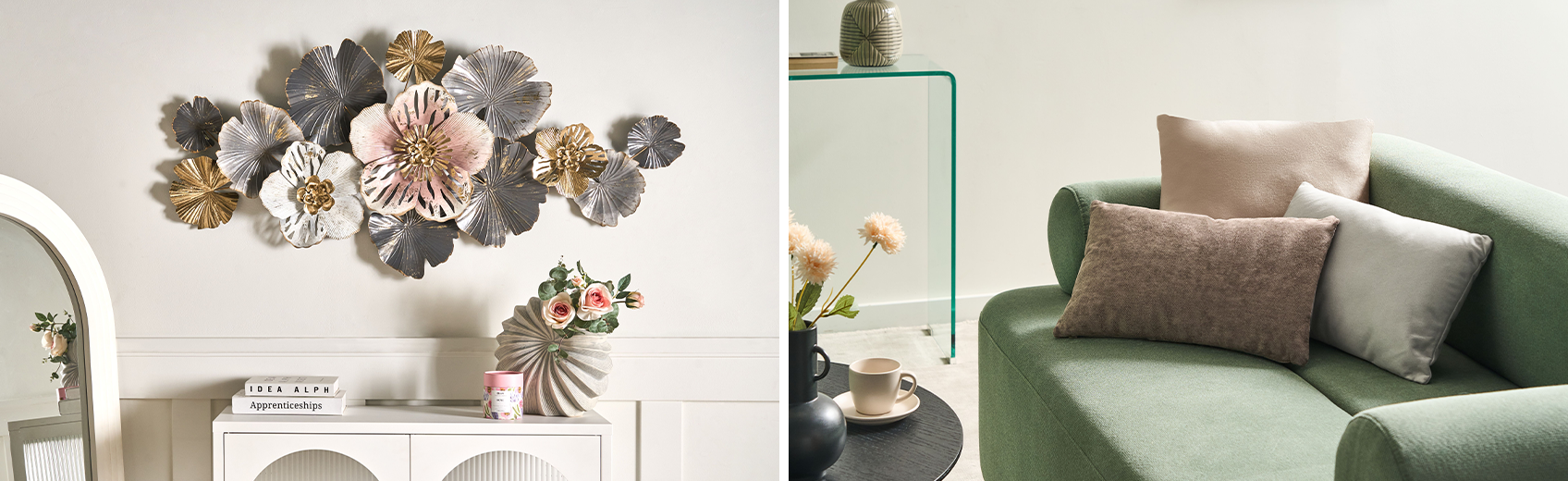
Building a cosy, layered light
Don't rely on the ceiling light alone once evening comes. An accent table lamp beside the sofa, a mantel dressed with a cluster of candles or fairy lights, or the glow of an electric fireplace all add warm pools of light that a single overhead fitting can't match. Two or three of these sources together, switched on instead of the main light, is usually enough to make a living room feel cosy rather than just lit.
Shop now: vases, decorative lighting, ornaments & figurines, artificial plants and flowers, electric fireplaces and mantels
What accessories suit a bedroom?
A bedroom needs fewer accessories than a living room, but the right ones, from a bedside lamp to a scented candle, change how restful the room feels at the end of the day. Bedroom accessories work best when they support winding down rather than adding stimulation:
- Bedside lighting: a lamp or wall-mounted reading light you can reach without getting up makes the biggest practical difference of any bedroom accessory.
- Candles and diffusers, held in a candle holder that suits your bedside table: scent affects how restful a room feels as much as its colour scheme does, so match the fragrance to how you actually want to feel before sleep.
- Boxes and baskets: keep chargers, clothes and other bedroom clutter out of view, especially useful in a small room.
- Scatter cushions: layered on top of standard pillows, they make a bed look finished during the day.
- Home fan: a freestanding or tower fan is an easy way to keep a bedroom comfortable through warmer months without any building work.
Layering cushions on a bed
A simple layout works for most double and queen beds: two 65x65cm European pillows at the back, your regular sleeping pillows in front of those, then one or two 45x45cm cushions leaned against them at an angle. For a fuller look, add a single rectangular bolster, around 30x50cm, right at the front. Five cushions in total is usually enough; much more than that and the bed becomes awkward to actually get into at night.
Shop now: table & bedside lamps, candles & diffusers, candle holders, boxes & baskets, scatter cushions, home fans
Which accessories suit a kitchen or dining room?
Kitchens and dining rooms don't have much spare surface, so every accessory here earns its place by being useful as well as good-looking.
A short list, but each piece does real work:
- Decorative plates and bowls: double as display pieces on open shelving and as serving ware when you have guests.
- Clock: a wall clock in a kitchen is genuinely useful for timing cooking, not just decorative.
- Herb pots: choose a plant pot with good drainage, since fresh herbs on a windowsill need good light but take up little space, and add scent as well as flavour.
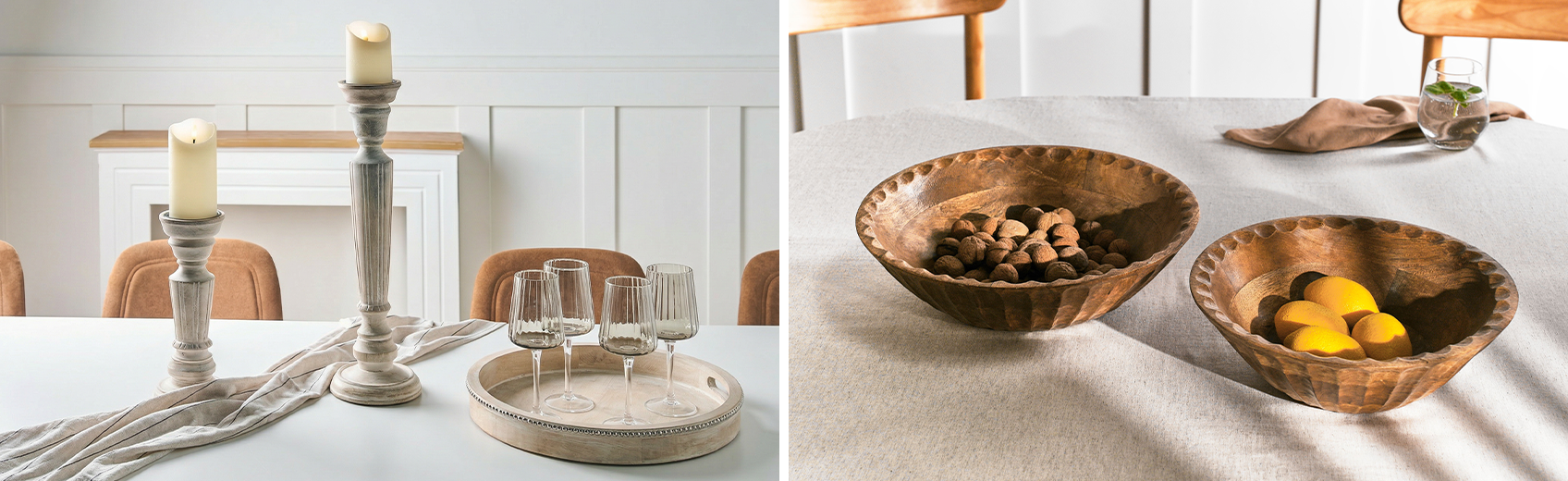
Which herbs do well on a kitchen windowsill
Basil, mint, parsley and chives like consistently moist soil, so water them as soon as the surface starts to feel dry. Rosemary, thyme and sage are more drought-tolerant and prefer to dry out a little between waterings, since soggy roots are more likely to kill them than a missed day. All of them need several hours of direct light, so a south- or west-facing windowsill gives the best results.
Shop now: decorative plates, clocks, plant pots
How do you accessorise a home office?
A home office accumulates small accessories fast, from a pen pot to a bookend holding up reference folders, and how you arrange them affects how easy the room is to actually work in.
A home office benefits from accessories that keep it organised as well as pleasant to sit in for a full working day:
- Office accessories: pen pots, file holders and small trays keep a desk clear without hiding what you need to reach.
- Bookends: keep a shelf of folders or reference books upright and easy to flick through, rather than sliding into a heap.
- Globe: a long-standing piece of office decor that works well on a bookshelf or desk corner.
- Waste bin: a basic requirement, so it's worth choosing one that fits the rest of the room.
- Room divider: creates a visual boundary around a desk in a studio or open-plan room, without any building work.
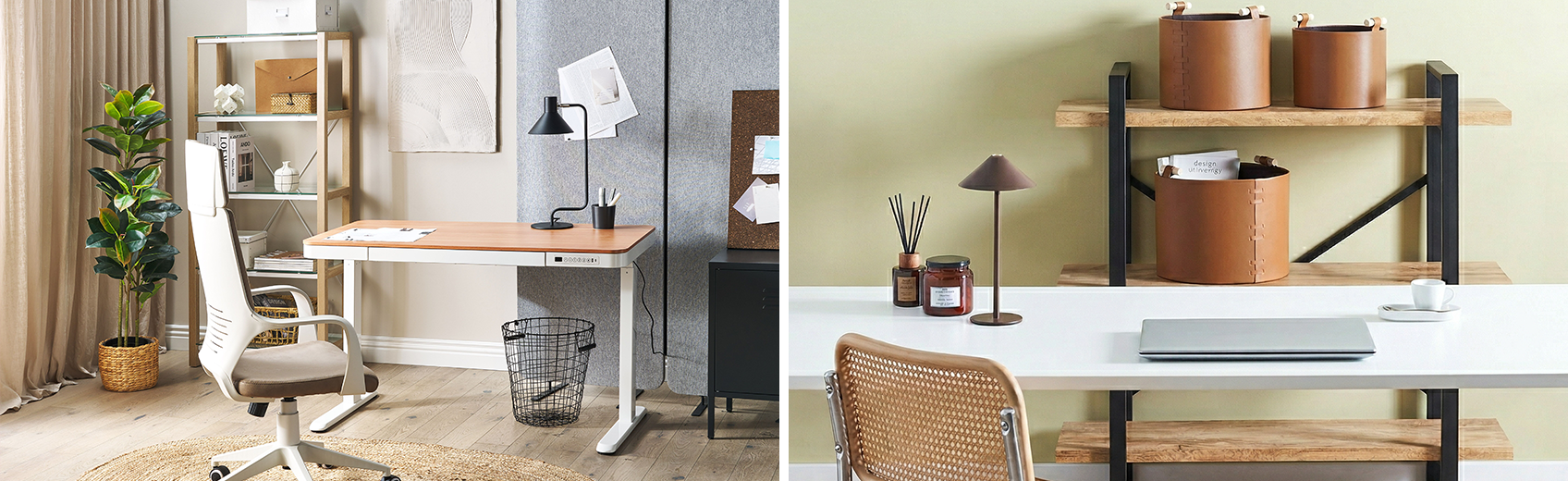
Working in a shared or open-plan space
A room divider placed behind or beside a desk signals a working area without closing the room off completely, which is useful if the same space doubles as a guest room or a corner of the living room.
Shop now: office accessories, bookends, globes, waste bins, room dividers
What accessories make a good hallway?
The hallway is the first and last thing you see each day, so a well-placed mirror, a piece of wall art or a lantern by the door does a lot of work for very little floor space.
A hallway is usually narrow and short on storage, so its accessories need to be either flat to the wall or small enough not to block the path:
- Mirror: useful for checking your reflection before heading out, and brilliant for bouncing light into what is often the darkest part of a home.
- Frames and wall art: a small gallery wall makes a plain corridor feel considered rather than just a route between rooms.
- Wall décor: for anything too three-dimensional to count as a framed piece, such as a wall-mounted sculpture or panel.
- Decorative lanterns: give a hallway or entrance table a warm, flickering light without needing a wired fitting.
How to hang a mirror in a hallway
Hang a hallway mirror with its centre 145 to 152cm from the floor, which puts it at roughly eye level for most adults. If the mirror sits above a console table or a shoe bench, leave 10 to 20cm of clear wall between the top of the furniture and the bottom of the mirror.
- Width: choose a mirror close in width to the furniture beneath it, so the pairing looks intentional rather than mismatched.
- Fixings: match the bracket and plugs to your wall type, stud wall or masonry, and check the mirror's weight against what the fixing is rated for.
- Position: a mirror on the wall opposite or at an angle to a window or door glass will bounce the most daylight into a dark corridor.
In a narrow hallway, keep the mirror flat to the wall rather than leaning a floor mirror against it, so the walking space stays clear.
Shop now: mirrors, frames & wall art, wall décor, decorative lanterns
How do I make accessories look like they belong together?
Accessories don't need to match exactly, but a few habits keep a mixed collection looking chosen rather than random:
Palette
Stick to one colour story
Choose three to five colours that repeat across the room. Not every accessory needs to be one of them, but having a throughline ties everything together.
Texture
Mix finishes, not just colours
Combine smooth ceramics with woven baskets, and matte surfaces with something reflective such as a mirror or glass vase. Variation in texture reads as more considered than matching surfaces.
Editing
Remove before you add
If a surface feels cluttered, take something away rather than finding room for one more piece. Accessories need space around them to stand out.
Pace
Build the collection gradually
Accessorising rarely works well in a single shop. Add pieces room by room and keep adjusting as your space and taste change.
What to check before buying home accessories
Before you order anything, run through these checks in roughly this order:
- Measure the wall space, including clearance above furniture, before buying a frame, mirror or wall décor piece
- Check fixing hardware against your wall type, stud wall or masonry, before hanging a mirror or frame
- Leave at least 90cm of walking space in a hallway once a console table, bench or basket is in place
- Confirm cushion covers are washable if they'll be used daily
- Check internal storage dimensions of a box or basket against what you actually need to fit inside it, not just its outer footprint
- Check clearance and heat output of an electric fireplace or mantel against the size of the room
- Keep candles 10cm from anything flammable, and match scent strength to the size of the room
Frequently asked questions
How many accessories is too many for one room?
There's no fixed number, but a useful guide is to group accessories in odd numbers, usually threes, since this tends to look more deliberate than pairs. Leaving roughly a third of any shelf or surface empty also helps individual pieces stand out instead of disappearing into clutter.
Do my accessories need to match my existing furniture?
No. Sharing one or two things in common, such as a wood tone, a metal finish or a colour from your palette, is usually enough to tie new accessories to furniture you already own. Matching everything exactly tends to look flatter than a room with some contrast.
Should I buy all my accessories at once or add them gradually?
Buying gradually, room by room, generally gives a more balanced result, since it lets you see what a space actually needs rather than guessing everything upfront. It also makes it easier to adjust as your taste or the room's use changes.
Can I change accessories with the seasons without buying a whole new set?
Yes. Swapping cushion covers, vase contents and candle scents is usually enough to shift a room's feel through the year, while keeping fixed pieces such as mirrors, lighting and larger storage the same.
Which accessories should I prioritise on a limited budget?
Start with pieces that solve a practical problem as well as a decorative one, such as storage boxes, mirrors and lighting, before spending on purely decorative items like ornaments or figurines. The functional pieces get used every day, so they earn their cost faster.