
 Free Delivery & Return
 365-Day Returns
 10 Million Happy Customers
 500,000 Products in Stock


Ovenware


Ovenware
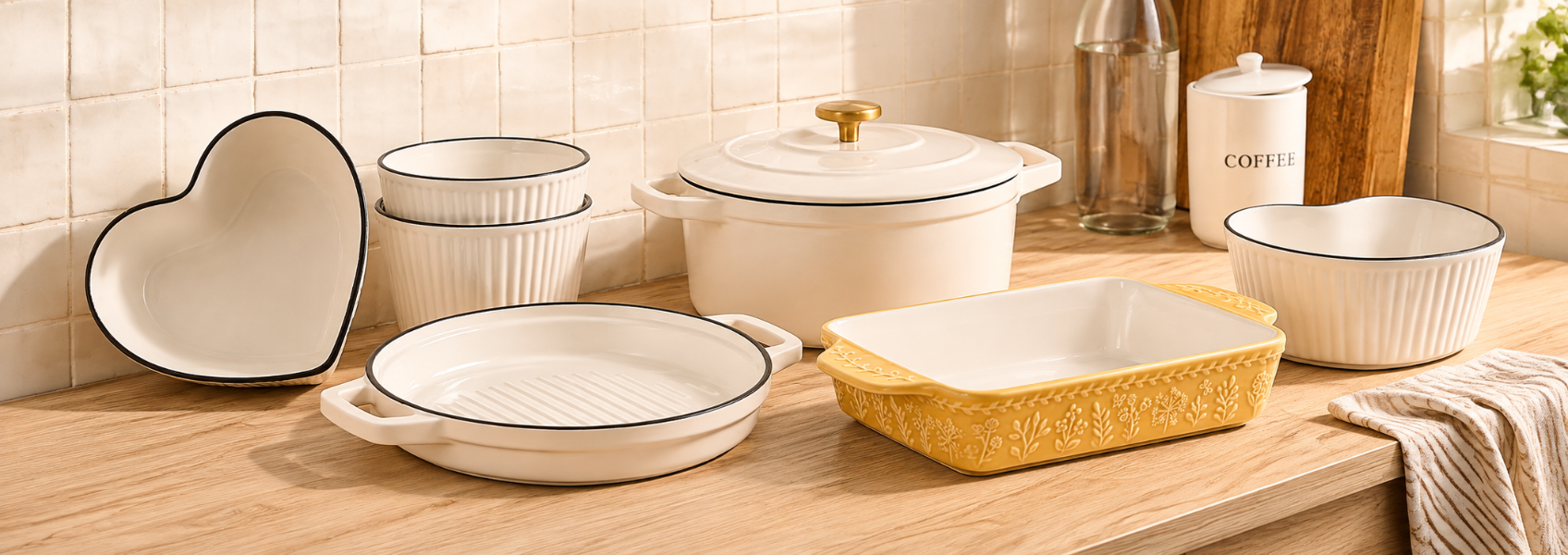
From slow-cooked casseroles to freshly baked desserts, the right ovenware makes preparing and serving meals more convenient. Whether you enjoy roasting vegetables, baking homemade dishes or preparing individual portions, choosing suitable oven dishes can make everyday cooking easier. Explore cast iron pots, stoneware roasting dishes and porcelain ramekins, and find out which type best suits your kitchen and cooking habits.
What types of ovenware are available?
Different types of ovenware are designed for different cooking methods and portion sizes. Some are ideal for preparing complete family meals, while others are more suitable for individual dishes or recipes that require longer cooking times.
Cast iron pots
Cast iron pots are a practical choice for recipes that require steady, even heating and longer cooking times. Their heavy construction retains heat well, making them suitable for slow-cooked meat, stews and hearty casseroles. Depending on the model, they can also be used on the hob before transferring food to the oven.
Read more: benefits of cast iron pots
Stoneware roasting dishes
Stoneware roasting dishes are suitable for preparing baked pasta, gratins, roasted vegetables, casseroles and other oven-cooked meals. Their solid ceramic construction retains heat well and helps keep food warm after it has been removed from the oven. They are also suitable for presenting prepared meals directly at the dining table.
Rectangular dishes provide a practical shape for arranging ingredients in even layers, while integrated side handles make them easier to carry. Sets containing dishes of different sizes offer flexibility for everyday meals, smaller portions and larger family recipes. Decorative finishes, such as embossed floral patterns, also make these dishes suitable for oven-to-table serving.
Porcelain ramekins
Ramekins are compact dishes designed for preparing and serving individual portions. They are commonly used for desserts such as crème brûlée, soufflés and baked puddings, but they also work well for small savoury recipes, individual gratins and baked eggs.
Their small size helps with portion control and makes serving more convenient, especially when preparing several individual dishes at once. Porcelain ramekins also have a smooth surface that is easy to clean, provided the manufacturer's care instructions are followed. When not used for baking, they can serve dips, sauces and small snacks.
Which material is best for oven cooking?
The material affects how an oven dish heats up, retains warmth and handles everyday use. Cast iron, stoneware and porcelain each offer different advantages, so the most suitable option depends on the recipes you prepare most often.
Slow cooking
Cast iron
Cast iron retains heat exceptionally well, making it a reliable choice for dishes that require long, steady cooking. Its sturdy construction also makes it suitable for recipes that involve browning ingredients before slow cooking.
Best suited for stews, casseroles, braised meat and slow-cooked meals.
Everyday baking
Stoneware
Stoneware distributes heat gradually and retains warmth after cooking. Its attractive ceramic finish makes it particularly convenient for preparing meals in the oven and serving them directly at the table.
Best suited for roasted vegetables, baked pasta, gratins and family-sized oven dishes.
Individual portions
Porcelain
Porcelain has a smooth, non-porous glazed surface that is practical for preparing and serving smaller dishes. Oven-safe porcelain ramekins are especially useful for recipes that need individual baking and presentation.
Best suited for soufflés, crème brûlée, baked eggs and individual desserts.
What should you consider when choosing ovenware?
Before choosing a new oven dish, consider how frequently you cook, the number of people you usually prepare meals for and the space available in your oven. A suitable shape and material can make both preparation and serving more convenient.
- Choose the right dimensions and capacity for the portions you usually prepare.
- Check the maximum oven temperature and any restrictions on use.
- Consider the material: cast iron for heat retention, stoneware for baked meals and porcelain for smaller portions.
- Look for practical handles and a shape that fits comfortably inside your oven.
- Check whether the dish can be used on the hob if you want to prepare recipes using both cooking methods.
- Review cleaning and maintenance instructions, including whether the item is dishwasher-safe.
Frequently asked questions
What is the difference between ovenware and cookware?
Ovenware is designed for preparing food in the oven, while cookware is a broader term that also includes pots and pans used on the hob. Some items, such as suitable cast iron pots, can be used for both.
Is stoneware suitable for roasting?
Yes, oven-safe stoneware dishes are suitable for roasting vegetables and preparing baked meals. Always follow the manufacturer's temperature limits and avoid sudden temperature changes that could damage the dish.
Can cast iron pots go in the oven?
Many cast iron pots are suitable for oven cooking, including slow-cooked dishes and casseroles. Check the product's maximum oven temperature and whether the lid, handles and knobs are oven-safe.
What are ramekins used for?
Ramekins are small dishes used for preparing and serving individual portions, including baked desserts, soufflés and savoury dishes. Check that the specific ramekins are oven-safe before using them for baking.
Can ovenware be used directly on the hob?
Only ovenware specifically approved for hob use should be placed on a burner or cooking zone. Many cast iron pots can be used on compatible hobs, but stoneware roasting dishes and porcelain ramekins are generally not designed for direct hob heat.